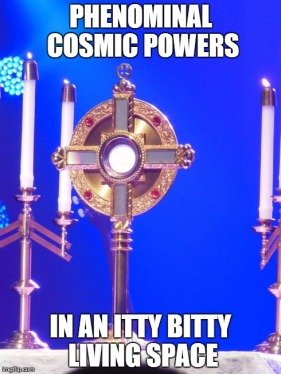
Male Priests: Why aren’t we all special?

Welcome back to Talking Thursdays – the posts where I write about why the heck Catholics do the things we do!

This week the topic is: Women priests


You know how when Pope Francis was newer people were expecting him to approve abortion, gay marriage, birth control, aaaaand the all male priesthood? Huh. Funny thing: none of that happened.

I know. SHOCKER.

It’s not anything new that we hear: the Catholic Church hates and oppresses women because she doesn’t allow them to be priests. And to that I would respond:

Clearly an oppressed woman (because she couldn’t be a priest)
Young, pro-life, and . . . oppressed (because she can’t be a priest)

“Okay, cut it out, Laura.” you say “Those women just accepted the fact that being a Catholic woman means you’re lame and oppressed, so they don’t count.”

Mmmkay.

Let’s move on to why are there only male Catholic priests?

In short, we take it back to the Bible when Jesus gave us the priesthood. He told his apostles:

“Do this in memory of me”

So, they celebrated the Mass in memory of him. Then they passed on this special designation to other men all the way until today when we see the order of the priesthood established as it is. Now men can go through education at a seminary and eventually be ordained a priest after taking vows.

We can look at this further by seeing that “All men who, through the Sacrament of Holy Orders, have become priests (or bishops) participate in Christ’s priesthood. And they participate in it in a very special way: They act in persona Christi Capitis, in the person of Christ, the Head of His Body, the Church.”

Article 1577 in the Catechism of the Catholic Church tells us that:

“Only a baptized man validly receives sacred ordination. The Lord Jesus chose men to form the college of the twelve apostles, and the apostles did the same when they chose collaborators to succeed them in their ministry. The college of bishops, with whom the priests are united in the priesthood, makes the college of the twelve an ever-present and ever-active reality until Christ’s return. The Church recognizes herself to be bound by this choice made by the Lord himself. For this reason the ordination of women is not possible.”

So, that’s pretty much it. We don’t prohibit women from being priests because we hate women or want to hold women back. We’re exercising a deep trust in the choice Jesus himself made.

I could go on and on about gender roles and where women stand in the church, but I’ll save that for another post 😉 For now, may I suggest breaking open your own copy of the Catechism?Start discovering Catholicism like a boss and see what the Catholic Church really says.

Resources & Links for more reading:

Catechism of the Catholic Church (Hardcover)

Catechism of the Catholic Church (Paperback)

Why not women priests? The papal theologian explains

Renewal: How a New Generation of Faithful Priests and Bishops Is Revitalizing the Catholic Church

The Priest Is Not His Own

Happy learning! Feel free to contact me (or comment below) with questions I can research and put into a future post.

To Life,

signature


P.S. Connect with me on FacebookTwitterPinterestBloglovin’ or by email!


P.P.S. All book links are affiliate links which means if you buy stuff from my links Amazon will give a small portion to me. Thank you!
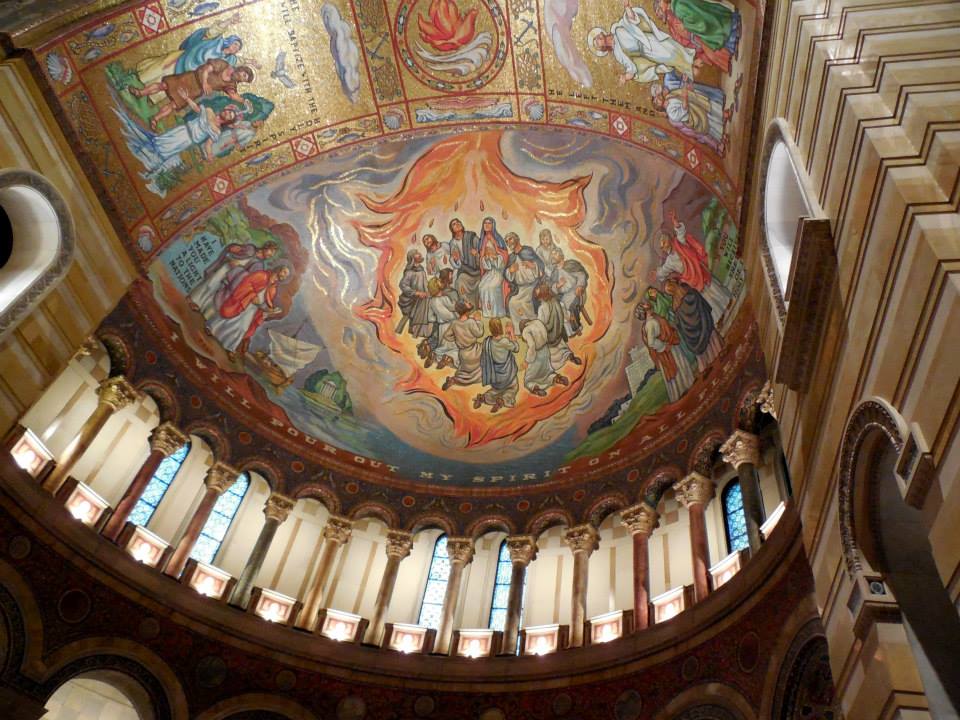
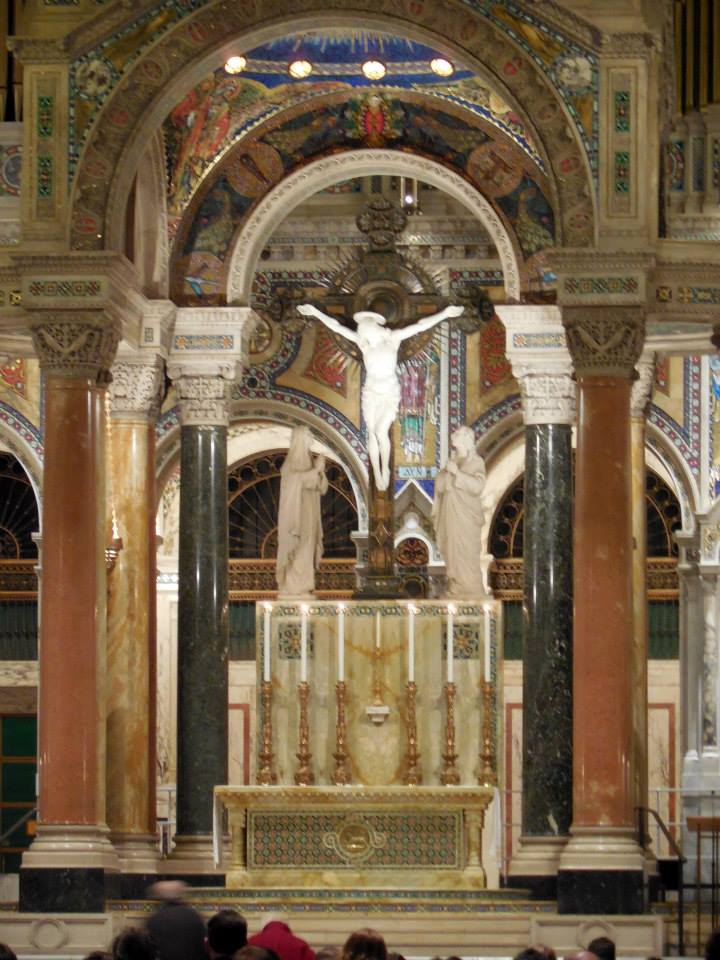
 

Bossy old white guys: why I’m Catholic

1982163_762545433776542_428680802_n


I was homeschooled all the way from elementary school through high school. Now I go to a Catholic college. My faith has always been part of my identity, but I did not truly appreciate it until the past few years when I began reading about why I believe what I do. Thinking about the intricate details of Catholicism could now qualify as one of my pastimes, and I love talking about why I am Catholic.

I am not Catholic because it feels awesome to have old white guys bossing me around.

I am not Catholic because I am a bigot or homophobic.

I am not Catholic because I was raised that way.

I am not Catholic because I want to shame the rest of the world into being Catholic.

I am Catholic and follow the teachings of the church because I believe it is the one, true church Jesus Christ founded which has been given the gift of the truth.

“So.” you say “you’re okay with being bossed around and following archaic pedophile priests around like a dog on a leash?”

“Actually” I say “it sounds like perhaps you’ve heard some misconceptions about my faith. Pull up a seat and a cup of coffee and let’s talk about it!”

You see, just recently I happened upon this article by a young woman named Mia whom I would love to sit and chat with for a while. Why? Because her story makes me sad. She grew up going to Catholic schools, but wrote about her take on Catholicism which really concerns me. It’s all too common to see these stories of people who are Catholic but do not represent church teaching. Unfortunately, this is often due to a severe lack of our doctrine being represented in Catholic education. I want to do my part to dive into what the church really says.

Here are a few points that stood out to me:

She says: “Religion will always be imperfect, because HUMANS created it.” But Jesus started the Catholic Church when he transformed Peter into the first pope. He said “You are Peter, and on this rock I will build my church”. He handed him the keys to his kingdom, which was an ancient way of symbolizing that the master is entrusting his property to someone else while he was away. The pope is kind of like Jesus’ babysitter and with the tools Christ left us, we have carried on since then.

Mia talks about how the church needs to change saying: “So, yes, the Catholic Church needs reformation but it WILL ALWAYS need reformation. This is because the clergy caters to the needs of human parishioners and, being that our race is in a continual state of progression, so too must the Catholic Church.”

It’s absolutely true that the church must work to meet the needs of an ever-changing body of Christ. However, this does not mean that we have to change core teachings, which seems to be what she was hinting at. Changing times doesn’t mean the truth changes.

Next she says “Whether you are carrying a cross up to Calvary towards salvation or trying to traverse the Noble Eightfold Path to reach personal self-awakening, it doesn’t really matter. You are trying to better yourself; you are trying to prescribe meaning to the seemingly incidental nature of life. This can be achieved through Judaism, Islam, Atheism, Hinduism etc.”

Honestly, I’m not sure where this comes from. As a Catholic, it’s strange to hear this because it sounds very Protestant to me. You know, just accept Jesus as your savior and we’re all good, right? I absolutely love the Protestants I know, and have learned so much from them. This point is a major difference in our beliefs though. Jesus said that if we want to follow him to take up our cross and follow him. He didn’t say “be a good person and do whatever the heck you want to do”.

Imagine you were a football player. You’re an AWESOME player if you help score touch downs and win points for your team. You couldn’t be that great player if you didn’t follow the rules, and ran around like a crazy person with the ball. It’s just like the Catholic Church. Jesus gave us guidelines to follow to become the people he created us to be. He gave us referees to call the shots in our bishops and pope. If we don’t follow the rules, we’re not going to be very good at being Catholic. So, yes. It does matter how you climb the mountain.

There’s a lot more detail I could go into with Mia’s post with her note on gay marriage and more. That’s for another day, though!

All this to say, Mia’s story makes me sad because the way she addressed some things makes it obvious that she, like so many people, has a notion of what the church is that isn’t entirely accurate. (Soon to be Saint) Archbishop Fulton Sheen said that “There are not one hundred people in the United States who hate The Catholic Church, but there are millions who hate what they wrongly perceive the Catholic Church to be.” and that couldn’t be more true.

1958034_762547123776373_1235918870_n

Mia, and all those reading this: when you delve into the beauty of Catholicism, I promise you will find a deeper appreciation for our church than you ever expected to have (even when it comes to the gay marriage issue). Please, before claiming things about the church, do your due diligence and read what the church teaches, not what you think it says. You can read the Catechism of the Catholic Church here online, which is a great place to start looking at why the church says what she does.

My faith informs every aspect of who I am, and being Catholic gives me the freedom of knowing the truth. I follow what the church teaches because even if I don’t understand a certain teaching, I have faith that as I seek a deeper understanding, I will eventually see the truth behind it. It’s not something fluffy I do because it feels good. I am Catholic because it’s what I’ve examined and found obvious to be true.

Maybe you think differently? Did you agree with Mia? Tell me your story!

To Life,

signature


P.S. Connect with me on FacebookTwitterPinterestBloglovin’ or by email!


Yes, you ARE beautiful

““You are beautiful, whether you know it or not.”

“We are all beautiful.”

“Everyone is beautiful to somebody.”

It’s cheerful stuff. It builds the self-esteem, makes people feel valued, and spreads joy and happiness across the internet.

It’s also b**ls**t.”

Have you seen this article making its waves around social media? I’ve seen lots of girls post it online saying things like “Read to the end. I think this is really important.” “Someone speaks the truth!” and things of that nature.

And I think it’s a bunch of baloney.

The author assumes that by “beautiful” we mean physically appealing. He says that the world owns the term and we need to let go of it – that it’s useless and only has to do with our physical make-up. By that judgement, people with tumors (like he said) and the guy making a weird face in the article would not be beautiful.

But I challenge that view.

Are you telling me that neither of these people are beautiful?

The definition of beautiful tells us that it means:  possessing qualities that give great pleasure or satisfaction to see, hear, think about, etc., excellent of its kind, wonderful; very pleasing or satisfying. It’s true that many people today use the term beautiful to indicate curb appeal. Yes, that’s dumb. And I agree with how the article ended:

“I want to tell you something, whoever you are. I don’t know if you’re beautiful, funny, smart, friendly, musical, caring, diligent, athletic, or anything else about you. All I know is this:

You are valuable.

You are important.

You are interesting.

You are worth loving.

So forget about “beautiful”. It’s become an ugly word anyway.”

But as I read the article and saw people talking about it online, I simply don’t agree with what they are saying: that telling someone they are beautiful is lame because it’s just saying how sexy they are or how visually appealing their body is.

Enter the document “The Feeling of Things, the Contemplation of Beauty“.

In this document I read for my Christian Moral Life class last semester, Pope Emeritus Benedict wrote about how beauty has something to do with pain. Plato explained the encounter with beauty as the “salutary emotional shock that makes man leave his shell and sparks his enthusiasm by attracting him to what is other than himself”.

Gosh, let that sink in. It makes me think about sunsets and the moment when you stare into the night sky and only stars stare back at you. When you’re holding a content baby and they just smile at you. When you see an athlete finally accomplish something amazing they had worked toward for a long time. When a person who has a handicap walks or does something society said they would never be able to do. You know what? Those are beautiful moments. And there is not another word that describes them so well.

Did any of those moments have to do with a visually appealing person?

Um, nope. Not really. Athletes are pretty sweaty. And babies give a tangible meaning to all types of bodily exports.

There are all kinds of situations and people who attract you to something bigger than yourself – to truth and beauty Himself. Some of those people might have bodily deformities (like the above pictures). Some of those people are normal people with bumps and lumps and pimples and freckles.

So yes. You are interesting and important and valuable and worth a whole lot. Really, you are. I could write a whole post on it (and sort of already did).

You have the ability connect your fellow human beings to something bigger than yourself – to pierce our hearts so deeply that we cannot help but be drawn to this deep sense of something awesome.

And that, my friends, is beautiful.


Connect with me on FacebookTwitterBloglovin’ or by email!

We Bow Down

Welcome back to the “why do they do that?” series (known as Talking Thursdays) where I attempt to explain why the heck Catholics do some of the things we do. I do the research. You start the talking! Last week we talked about salvation through grace (not faith alone) and this week the topic is:

Adoration9osjx

So, what is this whole thing with adoration? Let’s start off with what it is: adoration is when the Blessed Sacrament is exposed and people come and “adore” Jesus in the real presence of the Holy Eucharist. Of course, this might not make sense to people who don’t believe in the real presence. But Jesus told us “this is my body . . . do this in memory of me” and we Catholics take that literally when we say that the Eucharist becomes Jesus’ body during the consecration of each Mass.

Adoration is when we go and just be with Jesus.

At college many girls will say they’re going on a date with Jesus. And guys will say it’s their “bro time”.

You know, you can sing and preach all you want, but those activities are not Jesus himself. You sing to Jesus or about him. You preach about him. But there is nothing in the world like adoration where you are actually with Jesus. How insane is that?!?! It makes me realize how much more we Catholics should take advantage of this opportunity. After all, there’s this saying:

Not to mention that the Eucharist is a constant reminder of Jesus’ love for us:

The Catechism of the Catholic Church says in paragraph 2268 that “Adoration is the first attitude of man acknowledging that he is a creature before his Creator. It exalts the greatness of the Lord who made us and the almighty power of the Savior who sets us free from evil. Adoration is homage of the spirit to the “King of Glory,” respectful silence in the presence of the “ever greater” God.”

So what do you do in adoration?

  • Pray (I know, shocker)
  • Stare at Jesus and be amazed at his awesomeness
  • Look at him on the alter under the cross and give thanks
  • Talk with him: unload whatever is going on in your life, he can take it
  • Read the Bible or other spiritual writings

Being in adoration is the most peaceful and content I have ever felt. It’s nice at school because we have a perpetual adoration chapel where Jesus is exposed 24/7 and adoration in one of the student chapels during the week.You know how it doesn’t matter what you do with your friends and the people you love, as long as you are together? That’s kind of like adoration. Just hanging out with Jesus.

Give it a try, won’t you?

Further Reading:

What Catholic Girls Are Like in the Chapel (Funny One!)

No Wonder They Call It the Real Presence: Lives Changed by Christ In Eucharistic Adoration

Eucharistic Adoration: Drawing Closer to Jesus By: Kathleen M. Carroll

A Prayer Book for Eucharistic Adoration

Praying In The Presence Of Our Lord: Prayers For Eucharistic Adoration

Eucharistic Adoration: Reflections in the Franciscan Tradition


Connect with me on FacebookTwitterBloglovin’ or by email!


*Some of the above links are affiliate links. This means if you click on them and make a purchase I would receive a small portion of your purchase amount (at no cost to you). Thank you!

Oh you can’t get to heaven on roller blades

Drumroll please! Introducing . . .

Talking Thursdays

On these days  I will write about faith or life topics and you’ll have the opportunity to “talk” with me (and fellow readers) about them. Have a burning question about Catholicism? Question about some life issue? Submit it! Since I’m not an expert, I will do the research and present to you an explanation of why we do what we do or believe. Quotes, Bible verses, and references are included. For life issues it will focus more on science in most situations.

I’ve been doing a lot of faith-related reading recently, and am excited to share with you! Much of what I’ve read has been Protestant to Catholic conversion stories which are intriguing. It’s neat to see what the deciding factors were, which I’ll be using here. Please feel free to share these posts and get a conversation going!

This week’s topic:

How do Catholics believe people can get to heaven?

Good works, right?

Okay, calm down a second. If you’re Catholic, you might be thinking: Girl, stop misrepresenting us! You know it’s more than that! And if you’re not? Perhaps you thought “Well, duh. Why are you writing a whole thing on this?”.

Bear with me here, folks.

Until I started reading conversion stories, I didn’t realize that this is so important it’s one of two issues most Protestant people have with Catholicism. I didn’t know that it is a factor why many people are repulsed by Catholicism. This particular issue is such a big deal that Martin Luther said something along the lines of: the Church stands or falls on this one doctrine.

My understanding is that the two basic Protestant doctrines are Sola Scriptura (the Bible as their only authority) and Sola Fide (justification by faith alone). Sola Fide says that to get to heaven you have to believe in Jesus. Boom bam, baby! If that were the case, wouldn’t pretty much everyone go to heaven? According to this you could believe in God, do horrendous things . . . and go to heaven. Right?

Many aspects of religion require faith. You have to just trust sometimes and accept that you cannot fully understand it. I can see where people are temped to do that in this case. After all, take a look at what the Bible says:

“A worker’s wage is credited not as a gift, but as something due. But when one does not work, yet believes in the one who justifies the ungodly, his faith is credited as righteousness.” Rom. 4:4-5

“Believe in the Lord Jesus, and you and your household will be saved” Acts 16:31

So what does the Catholic Church teach?

First off, what is “justification”? It means to be righteous or made right in the eyes of God. The Catechism of the Catholic Church says:

“Justification detaches man from sin which contradicts the love of God, and purifies his heart of sin. Justification follows upon God’s merciful initiative of offering forgiveness. It reconciles man with God. It frees from the enslavement to sin, and it heals.” (1990)

It “has been merited for us by the Passion of Christ who offered himself on the cross as a living victim, holy and pleasing to God, and whose blood has become the instrument of atonement for the sins of all men. Justification is conferred in Baptism, the sacrament of faith. It conforms us to the righteousness of God, who makes us inwardly just by the power of his mercy. Its purpose is the glory of God and of Christ, and the gift of eternal life” (1992)

“Our justification comes from the grace of God. Grace is favor, the free and undeserved help that God gives us to respond to his call to become children of God” (1996)

So.

Basically, Catholics say that justification is deification – when we become “like God” when our sins are wiped away at the moment of baptism. At that moment we become open and able to receiving his graces, some of which are the theological virtues of faith, hope, and charity. Each is an integral part of being “saved”: faith helps us to accept the grace, hope gives us the reason for it in the first place, and charity helps us to live a good life hereafter. It’s not a one time deal when you accept Jesus as your Lord and Savior that saves you. It’s a continuous cycle.

I was saved.

I am being saved.

And I hope to be saved when the last day comes.

See Bible quotes for that here.

I could go on and on about who Catholics believe can get to heaven, but I’ll save that for another topic 🙂

That’s what we believe and why: faith, hope and charity all at once – not just faith. This is just scratching the surface, though, so do more reading! 

What are your thoughts?

Here are suggestions for further reading (though since I haven’t read them all myself I cannot completely attest to their awesomeness):

Justification Sola Fide: Catholic After All? by Christopher Malloy

Not by Faith Alone: A Biblical Study of the Catholic Doctrine of Justification

The Catholic Doctrine On Justification Explained And Vindicated

Handbook of Catholic Apologetics: Reasoned Answers to Questions of Faith

What Catholics Really Believe: Answers to Common Misconceptions About the Faith


Connect with me on FacebookTwitterBloglovin’ or by email!


*Some of the above links are affiliate links. This means if you click on them and make a purchase I would receive a small portion of your purchase amount (at no cost to you). Thank you!