Tips for proceeding in the battle for marriage

This post is part of the Love Wins series – a series of posts covering topics within the issue of gay marriage (post 1, post 2, and post 3). The goal of these posts is not to convince anyone to think what I think, but to create a conversation and explore the topics together. I am not an authority figure on this issue, and will not always approach this from a highly academic perspective, but am writing as a Catholic young voice seeking the truth. I hope you’ll follow along and be part of the conversation!

Love Wins A series on gay marriage


In the immediate aftermath of the recent decision by the supreme court, I was mostly relieved to see that people I know weren’t being haters on social media. As time went on, though, some things came up that kind of made me cringe.

Exhibit A: Comparing gay people to unborn babies (or vice versa, or comparing the issue to abortion at all)

Exhibit B: Whining about being a victim

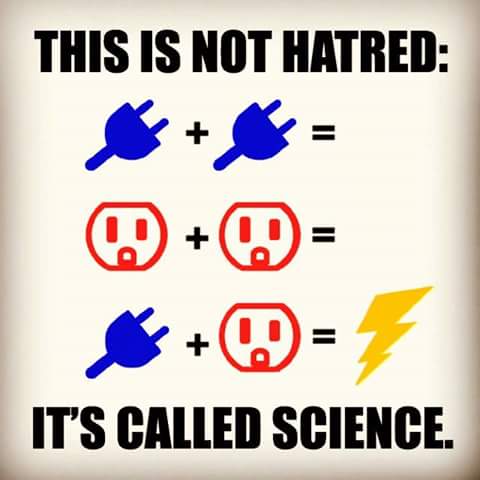
Exhibit C: Trying to prove your point with a fancy graphic.

facebook_1436124268127

Here are some pointers for people who stand behind traditional marriage on how to not be a crazy person moving forward:

1. Be a witness to the truth about love and marriage. It’s not all butterflies and unicorns, but it’s always worth it. Unless people can see that through you, posting articles and saying things isn’t going to help very much. Actions speak louder than words.

2. Educate yourself. Knowledge is power. Literally. You’re representing a lot of people, so represent well! I recommend reading a lot, paying attention to laws and studies, and becoming well versed in the why behind our beliefs.

3. Defy the stereotype of bigot and homophobe by . . . not being a bigot or homophobe. Love people, even if they disagree. And if people call you names for just believing in traditional marriage, respond gracefully. Nobody can make you a bigot unless you’re actually being one.

4. Remain open to conversation. And make sure that when conversations come up, you lovingly offer what might be a unique perspective.

5. Listen to people’s concerns on both sides, and don’t discount them. Everyone needs to be heard, valued, and responded to lovingly.

6. Have more of a response than JESUS for why you believe what you do. Sure, you could quote the Bible, but how relevant is that to people who don’t share your Christian beliefs? This goes back to #1 and the need to be educated. We’ll talk more about it tomorrow!

7. Keep the hope alive. In the end, no person or legal institution can change the sacrament of marriage, or the biology of men and women. Our society is changing. The way traditional marriage is treated is changing. But have hope, and don’t despair! Know that God is all about second chances. No one is beyond His mercy and love. Let no one be beyond ours.

If you can’t already tell, I think the most important thing on both sides of this debate is to love our neighbors – even when we disagree. That’s why this series is called “Love Wins”.

Connect with me on FacebookTwitterPinterestBloglovin’ or by email to follow along during this series. And help spread the conversation by sharing this post!

To Life,

signature


Image via Hartwig HKD on Flickr.

Further reading:

5 Ways to Respond to the Supreme Court’s Decision on Same-Sex Marriage


The truth about tolerance

This post is part of the Love Wins series – a series of posts covering topics within the issue of gay marriage (post 1, post 2). The goal of these posts is not to convince anyone to think what I think, but to create a conversation and explore the topics together. I am not an authority figure on this issue, and will not always approach this from a highly academic perspective, but am writing as a Catholic young voice seeking the truth. I hope you’ll follow along and be part of the conversation!

Love Wins A series on gay marriage


People on both sides of the gay marriage debate are guilty of being mean. Plain and simple. Not everyone has been mean about it, but many people (including myself) have probably been guilty of airing an insensitive comment or two.

But this post isn’t about mean people. It’s about learning how to live around people who we disagree with on controversial, emotionally charged, issues. It’s about ordinary people confronted with a tough issue.

Ordinary people don’t usually want people to be mean to them. Nor do they go around looking for opportunities to be mean. However, even people who do their best to NOT say nasty things are accused of being intolerant bigot haters of love these days….or something along those lines. I’m talking mostly about supporters of traditional marriage. But on the flip side, some supporters of gay marriage have been subject to untrue accusations as well.

We all mostly want the world to be harmonious place, right? So it makes sense that we get mad at people who mess up our perfect plan for the world.

But we can and do broadcast our opinions and beliefs on worldwide platforms. It kind of makes me scratch my head when people start crying that someone disagrees with them after taking a stand for something. And it makes me sad that people are personally offended when a view other than their own is shared.

The thing is, putting your opinion out there is not inherently mean.

Having an opinion or belief does not mean you automatically hate people who don’t share your belief.

In the aftermath of the recent supreme court decision, I saw a friend post a lovely response article. And someone else literally commented “You are intolerant”. Like, what? Is having an opinion intolerant?

Or am I just expected to keep my mouth shut when I believe in something? 

And what does tolerance even mean?

Many people use it to mean “accepting behaviors you disagree with as as good for other people, even if you think they’re wrong”. It’s used as a synonym for agreement these days. If I don’t agree with a gay marriage supporter’s view, I’m a bigot, right? Well, no.

Case in point:

“We’ve redefined tolerance to mean never disagreeing. The real definition of tolerance is first disagreeing and then putting up with the people you disagree with. You have to disagree to start being tolerant.”

I have my beliefs because they are true to the best of my knowledge. And you know what? We all have different beliefs. We don’t all agree. And that’s part of life. We have to put up with it.  To strive to live together regardless of differing beliefs is what tolerance is all about. It’s not about agreeing with each other.

So here we are with different beliefs. I think you’re wrong about some things. You probably think I’m wrong about lots of things.

We don’t have to agree with each other.

But what we are obligated to do is to love each other anyway.

Every single person, regardless of beliefs, is worthy of respect and love. Nothing can change that. No matter what. Even when we have polar opposite beliefs. Our behavior should go beyond tolerance, even. I should not only tolerate you. I should love you. I want to love you, even if it’s hard. I want to be able to know and love people who are different than me, because love wins.

I’m not going to agree with everyone on everything, but love isn’t about agreeing. It’s about accepting a person as a creature with inherent dignity that nothing can change. I don’t have to accept your beliefs to love you. And I don’t have to share your position on gay marriage to be friends.

Tolerance is about doing your best to live in peace with people you are at odds with. I truly hope as our country moves forward that we can do a better job on ALL sides of keeping the peace.

We’ll talk more about this in an upcoming post on distinguishing between a person and an issue. Until then:

Connect with me on FacebookTwitterPinterestBloglovin’ or by email to follow along during this series. And help spread the conversation by sharing this post!

To Life,

signature


Images via Hartwig HKD on Flickr.

Further reading:

Disagreement is not discrimination

I love you, but I disagree with your lifestyle. What now?

This post is part of the Love Wins series – a series of posts covering topics within the issue of gay marriage. (First post here.) The goal of these posts is not to convince anyone to think what I think, but to create a conversation and explore the topics together. I am not an authority figure on this issue, and will not always approach this from a highly academic perspective, but am writing as a Catholic young voice seeking the truth. I hope you’ll follow along and be part of the conversation!

Love Wins A series on gay marriage

One of the biggest challenges facing people who believe marriage is between one man and one women is how to support and love people who are directly affected by our beliefs. Where do we draw the line between loving people with homosexual tendencies, and going too far in implying that we support a lifestyle we don’t agree with?

Here are a few tips for trying to balance disagreeing with life choices and loving people who make them:

1. Love everyone, regardless of sexual orientation, race, gender, religion, etc.

Just because someone is sexually attracted to someone of the same doesn’t mean they’re less human or less deserving of respect. We have to remember that everyone should be treated with love no matter what, because nothing can take away our dignity as human beings.

2. Be conscious of how you’re being asked to participate in other people’s lives.

If I had a friend moving in with her boyfriend, I wouldn’t give them a housewarming gift because I don’t support cohabitation. It’s not because I don’t love them or want them to have a beautiful home. I just won’t support their lifestyle because I believe it’s wrong. Same with gay marriage. If I’m ever asked to attend a gay marriage ceremony, I will not attend or give a wedding gift. It’s not because I don’t love those people, but I can’t bestow my support of their lifestyle on them by supporting their union. Be conscious of what you’re being asked to do, and choose wisely.

3. Be clear in loving people that you love and support them as human beings, but not their lifestyle.

It’s important to be careful how we articulate our beliefs in these situations. They’ll know we are Christians by our love, right? We have to respond to invitations and questions remembering that every person possesses an innate dignity and is worthy of love and respect. But at the same time, we have to stick to our beliefs. Sugarcoating issues never helps us get down to the nitty gritty of loving people where they’re at.

The Catechism of the Catholic Church tells us in paragraph 2358 that “They must be accepted with respect, compassion, and sensitivity. Every sign of unjust discrimination in their regard should be avoided.” But what do we accept? And what’s going too far?

Perhaps we need to be a bit more explicit here. What exactly can and can’t we do?

DO

  • welcome homosexual friends into your life
  • treat people with homosexual tendencies with the same respect as any other person
  • both of the above, even if they have partners
  • be gracious in conversation with homosexual friends
  • educate yourself so you can correct misconceptions
  • be open to talking about the truth about love and marriage
  • be a witness to the challenge and joy of being a Catholic/Christian, even when it’s hard (because you might be the only Bible someone ever reads)
  • listen to the struggles people with homosexual tendencies experience

DON’T

  • tell homosexual friends they’re going to hell (because we can’t know that)
  • focus on your friends sexual orientation
  • downplay that living the truth about love and marriage can be hard
  • attend a gay marriage ceremony
  • provide supplies for a gay marriage ceremony
  • perform a gay marriage ceremony
  • have an agenda to convert every single homosexual person to church teaching

And this is where it gets harder. If you have homosexual friends with partners, and they have kids, how do you handle your kids being friends? Depending on their age, that might be difficult to explain to your child why their friend has two mommies or daddies. Does that mean they can’t be friends? No! A parent’s choice doesn’t diminish the dignity of their child.

But it does mean we have to make careful choices as to the activities we participate in.

To be honest, there’s no clear cut answer as to what exactly we can and cannot do when it gets down to the nitty gritty. I expect it will be clarified more as the Church learns how to respond to this. But for now, we’re going to have to take this mostly on a case by case basis.

It’s hopefully easy to understand why I wouldn’t attend a gay marriage ceremony. That clearly sends a message of support for the union, which is not an option. And I’m not going to consciously encourage people to sin. But the day to day questions are harder. When these situations do come up, I highly recommend going to a trusted, wiser, friend – or even better, a priest! – if you need help discerning what to do.

There are differing opinions on what we can and cannot do, even among the Catholic school of thought. But in the end, we’re all people, regardless of our race, gender, sexual orientation, religion, or lifestyle choices. Nothing can change our inherent dignity. Nothing can change the fact that we are people worthy of the utmost love and respect. People with homosexual attraction are no exception.

Connect with me on FacebookTwitterPinterestBloglovin’ or by email to follow along during this series. And help spread the conversation by sharing this post!

I love you, but I disagree with your lifestyle, now what A Drop in the Ocean

Are there any situations that have come up in your life you’re wondering about? How did you handle them? How can we concretely show our love of a person without supporting their lifestyle?

To Life,

signature

Images via Hartwig HKD and Nicolas Alejandro on Flickr.

Further reading:

Catholic, Gay, and Doing fine

Always Our Children: A Pastoral Message To Parents Of Homosexual Children And Suggestions For Pastoral Ministers

Courage, an international ministry of the Catholic Church for persons with same-sex attraction – find a chapter near you!

Gay Marriage: How can love say no?

This post is part of the Love Wins series – a series of posts covering topics within the issue of gay marriage. The goal of these posts is not to convince anyone to think what I think, but to create a conversation and explore the topics together. I am not an authority figure on this issue, and will not always approach this from a highly academic perspective, but am writing as a Catholic young voice seeking the truth. I hope you’ll follow along and be part of the conversation!

Love Wins A series on gay marriage

Let’s start at the very beginning, shall we? You probably know that the Catholic Church teaches that gay marriage is wrong. To kick off this series, I thought it would be good to talk about why.

Before a Catholic wedding, the couple is asked:

“(Name) and (name), have you come here freely and without reservation to give yourselves to each other in marriage?”

“Will you honor each other as man and wife for the rest of your lives?”

“Will you accept children lovingly from God, and bring them up according to the law of Christ and his Church?”

The couple then vows to take the other person “to have and to hold, from this day forward, for better, or for worse, for richer, for poorer, in sickness and in health, until death do us part.”

Those are pretty big promises if you ask me.

These vows mean that the couple has promised to freely live in unity with the other person through the highs and lows of life while honoring each other and welcoming children (the result of their union) until their marriage bond is broken by one of them dying.

The male and female body, which are made for union with each other, have a language of their own. In the total giving of themselves to each other, they are saying “I am completely yours. You are completely mine. We are one now, and possess a bond forever that is unbreakable.” Naturally, children are a result (barring any struggle with infertility). And this unity is made concrete through the promises made to each other by taking marriage vows.

This is why the Catholic Church cannot, does not, and will not, recognize the union of two people of the same gender as marriage: it is simply impossible.

The female body was not made for union with another female body, and the same for men. It is naturally impossible. This is self evident. It’s not a rule made up by old white guys. It’s biology. The self-giving type of love demanded in a marriage from the Catholic perspective is impossible with two people of the same gender.

Well, so what?

If two people love each other, who cares if they’re able to have kids, right? It’s a legitimate question. But in response, I have to ask: Is the feelings of two consenting adults the only prerequisite to marriage?

The questions couples are asked before the wedding aren’t about their feelings. And that’s for a reason.

It may sounds horribly unromantic, but marriage through the eyes of the Catholic Church isn’t just about living a blissfully sexy life with your chosen partner.

It’s about getting each other to heaven.

THAT is why gay marriage cannot, does not, and will never exist within the Catholic Church.

It’s not because we don’t want people to be in love. It’s because love is about so much more than pleasure.

Now don’t get me wrong. Homosexual couples seeking to have a recognized union aren’t necessarily seeking it solely for pleasure. I’m sure many of them value marriage. And it’s absolutely true that many heterosexual couples out there, even within the Catholic school of thought, seek marriage solely for pleasure’s sake.

That doesn’t make either case right.

The Catholic Church, in her wisdom that is so very hard to understand sometimes, has taught many hard truths since the beginning in regards to love and marriage. And it’s all because life isn’t about getting what we want.

As someone who is writing from a religious understanding, I have to include Jesus’ words that if anyone wants to follow him, we must take up our crosses and follow him. We all desire things that won’t help us get to heaven, things that are disordered. And that’s why we have to pick up the struggles we have in life and run after the only one who can fulfill our heart’s desires.

Maybe your struggle is with homosexual attraction. Maybe it’s an eating disorder. Poor body image. Addiction to porn. Lack of motivation. Loss of loved ones. Debilitating illnesses.

But encountering these struggles and being told “no” to the easy way out doesn’t mean we’re wrong or that your life isn’t worth living. It’s just harder than expected.

You may still be wondering how in the world we can consider this position loving. How can telling someone “no” to a desire so integral to them be okay? How dare we do such a thing?

I’d just like to remind you that the Catholic Church doesn’t single out those with homosexual attraction. She says “no” to sex outside of marriage, divorce, pornography, cohabitation, and contraception. All of this is to help order our love most toward what is good, beautiful and true. This is why anything outside the truth the Catholic Church stands behind is “disordered”, per se, ordered toward something other than what we were made for – another topic for another post.

All of this to say, we love and stand behind the goodness of every human person. We all make mistakes. We all mess up. And gay marriage is one of those things the Church is rather clear about being a mistake. That’s because love hurts sometimes.

Mary put it beautifully when she said recently:

Yes, sometimes love hurts. We don’t go seeking pain in the name of love, but when the pain inevitably comes, it doesn’t mean it’s not real love. It just means that the time to witness to the depth of your love has arrived.

The depth of the love of the Catholic Church says that we don’t always give people what they want. That’s a tough pill to swallow, but love always wins. Stay tuned so we can chat about more topics within the issue!

Connect with me on FacebookTwitterPinterestBloglovin’ or by email to follow along during this series. And help spread the conversation by sharing this post!

Gay Marriage How Can Love Say No A Drop in the Ocean

To Life,

signature

Images via Hartwig HKD and netzanette on Flickr.

Further reading: Considerations regarding proposals to give legal recognition to unions between homosexual persons

The Third Way – how the Catholic Church proposes people with homosexual tendencies approach life

Gay, Catholic, and Doing Fine – why one young, gay, man is in love with the Catholic faith

7 Quick Takes – Vol. 60: On the lighter side

There’s been a lot of serious issues and stories going around lately, so this week I wanted to put together a brief intermission and take a moment to cover less serious happenings. But first!

1. Airing soon will be my first blog series. Get pumped! If all goes well, we will kick off on Monday the 6th. The intention is to create conversation about this highly contentious issue, so please follow my blog via Facebook, Bloglovin’, or email to see the series in real time!

Love Wins A series on gay marriage


2. Now on to lighter things! Someone shared this on Facebook, and I found it intriguing. Sometimes it seems like there’s no single word that perfectly describes a feeling or situation, but maybe I just don’t know enough words.

Intriguing

3. Have you ever seen this video? Because you should.

4. Now how about a feel good story? Here’s one coming your way!

5. And here’s a  funny link: 12 Classic love scenes improved by a Chipotle burrito. Chipotle is quite delicious.

6. Did you know Chick-Fil-A’s Cow Appreciation Day is coming up? Dress like a cow from head to toe on July 14th and you’ll get a free meal! My family did it last year, and it’s straightforward. Free food for dressing like a cow, yes please! Good thing to know: if you dress up partially, you still get a free entree, just not a complete meal. That’s only for people who go all out 🙂

7. And now, back to a quick reminder about this series! After reading so many articles in the last week, I’m excited to elaborate on several topics within the issue. Please join me via Facebook, Bloglovin’, or email to join the conversation.

Love Wins A series on gay marriage

To Life,

signature

P.S. Connect with me on FacebookTwitterPinterestBloglovin’ or by email.